6 Reasons Why You Won't Get a Large Tax Refund in 2026 Despite What You’ve heard.
Don’t spend that refund check before you actually file.
Recently, President Trump has been posting on social media claiming taxpayers will see the "largest refund in history" in 2026. Many influencers and preparers are repeating this soundbite just to grab attention, promising massive checks due to the new retroactive tax cuts.
But they are leaving out critical context.
While it is true that some withholding tables didn’t update in time, meaning some people overpaid, that doesn’t guarantee a huge refund for everyone. In fact, many hard-working taxpayers are in for a surprise. As a tax professional, I want to give you the real story. Here are the 6 real reasons why you might not get a large refund, or worse, no refund at all.
1. You Didn’t Adjust Your W4 (Insufficient Withholding)
The most common reason for a disappearing refund hasn’t changed: incorrect withholding.
Despite the news about tax cuts, the math remains simple. If you didn’t update your Form W-4 with your employer to account for a second job, a working spouse, or a change in dependents, you likely underpaid throughout the year. The promised "record refunds" mostly apply to people who had too much taken out from their paycheck based on old tax rates. If you had too little tax taken out from your paycheck because of an outdated W4, new tax laws won't magically fix that deficit. You can’t get a refund of money you never paid in the first place.
2. The "Gig Economy" Trap (Self-Employment Income)
Did you drive for Uber, DoorDash, or pick up freelance work this year?
Millions of taxpayers are now earning side income, but unlike a W-2 job, no taxes are withheld from these payments.
- The Surprise: You are responsible for both the employee AND employer portion of Social Security and Medicare taxes (totaling 15.3%).
- The Result: Even if you owe zero income tax thanks to new credits, this 15.3% Self-Employment tax can eat up your entire expected refund.
If you made $10,000 in gig work and paid no estimated taxes, you likely owe ~$1,530 right off the bat. That bill gets deducted directly from any refund you were hoping for.
3. You Earn Too Much (Yes, Really)
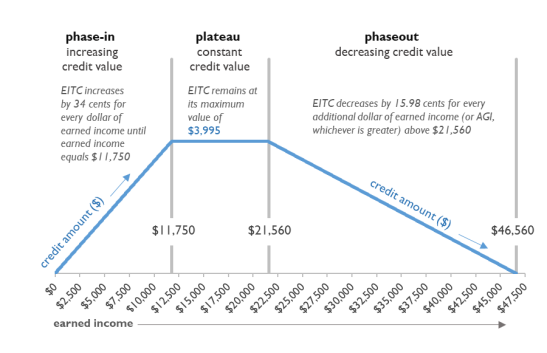
Yes, really, even if it didn’t feel like it, you could’ve earned too much money, but earning slightly more money can sometimes cost you thousands in credits due to phase-outs.
New taxpayers without children, or families with rising incomes, often lose eligibility for refundable credits like the Earned Income Credit (EIC) or the Child Tax Credit (CTC).
- Example: For a Head of Household filer with one child, the Earned Income Credit completely phases out once earnings exceed approximately $51,000.
- The Impact: If you picked up extra shifts or a side gig that pushed your income from $45,000 to $52,000, you might have disqualified yourself from a major credit, significantly reducing your refund.
4. The "No Tax on Tips" Confusion
There is a lot of hype around "No Tax on Tips," but the execution is tricky.
First, this deduction typically requires that tips are properly reported on your W-2 or verified records. If you pocketed cash tips and didn't report them to your employer, they often don't qualify for the deduction because there is no paper trail.
Second, State Taxes. While the Feds might give you a break, states like New York and California have not necessarily conformed to these federal changes. You could see a nice federal adjustment but still owe a hefty state tax bill on that same tip income, balancing out your refund.
5. The Overtime Math Is Misunderstood
This is the biggest area of confusion right now. President Trump’s "No Tax on Overtime" proposal does not mean your entire overtime paycheck is tax-free.
The deduction generally applies only to the "premium" portion of your pay, the extra money you earn above your standard rate.
- The Formula: If you get paid "Time and a Half" (1.5x), only the "0.5" part is deductible.
- The Math: You can often calculate the deductible amount by taking your gross overtime pay and dividing it by 3.
- Example: You earned $3,000 in overtime pay.
- Deductible Amount: $3,000 / 3 = $1,000.
- Taxable Amount: $2,000 is still taxable!
Many taxpayers are filing, expecting the full $3,000 to be tax-free. When they realize 2/3 of it is still taxed, that "huge refund" shrinks instantly. Keep your final pay stub, you will need to distinguish gross overtime from the allowable deduction.
6. Filing Timing & Delays
Finally, patience is running thin, but rushing will hurt you.
Because these tax changes (retroactive for 2025) are complex, IRS systems often require programming updates mid-season.
- The Risk: If you file early in January before the IRS updates their system for the new "Overtime" or "Tip" schemas, your return could be flagged for manual review or "Error Resolution."
- The Consequence: Instead of a fast refund, you could be stuck in a 6-week (or 6-month) limbo. Rushing to file before you have every single 1099 or W-2 increases the chance of an amendment, which takes even longer.
Conclusion
While the headlines promise record-breaking checks, the reality is in the details. Insufficient withholding, gig taxes, credit phase-outs, and confusion over the new Overtime/Tip rules are legitimate reasons your refund might be smaller than the hype suggests.
Don't spend the money before it hits your bank account. Review your documents carefully, and if you have gig income or overtime, double-check your math.
Want to stay ahead of the IRS confusion? 👇🏽